Monday, October 27, 2014

Ebola Signs, Symptoms, and Prevention


      With the growing fear of the spreading Ebola virus, I wanted to do a post that will provide signs, symptoms, and tips to prevent Ebola infection. Most of these tips are good information that can apply to most biological threats. Most of the information I will be presenting in this post was obtained primarily from the WebMD website.
     
Signs and Symptoms of Ebola

        Ebola causes bleeding inside and outside of the body. As it spreads through a body, it begins to destroy the immune system and internal organs, and causes blood-clotting cells to drop, which leads to uncontrollable bleeding. The most common symptoms of Ebola are:

-High Fever
-Headache
-Joint and Muscle Aches
-Sore Throat
-Weakness
-Stomach Pain
-Lack of Appetite

            These symptoms can show anywhere from 2 to 21 days after infection. Having such a long incubation time is one of the ways that it is able to spread so fast across large distances, as someone not knowing that they are infected could easily spread the infection while traveling. It is very difficult to determine if a person has Ebola from these symptoms alone, and doctors will usually  test for other diseases first, like cholera or malaria.

            One good thing to be aware of is that Ebola is not as contagious as more common viruses like colds, influenza, or measles. Additionally, you cannot contract Ebola from air, water, or food, and a person who has Ebola but has no symptoms can't spread the virus.
            Ebola can spread through skin contact, or by contact with bodily fluids, and this can happen from either humans or animals.
           
Treatment for Ebola
            Currently, there is no known cure for Ebola. The current treatment includes an experimental serum that destroys infected cells. The following is also a list of common ways doctors help manage Ebola symptoms:

-Fluids and Electrolytes
-Oxygen
-Blood Pressure Medication
-Blood Transfusions
-Treatment for Other Infections


Ebola Prevention Tips
         

           With no known cure, and with a 90% fatality rate, the best way to survive an Ebola infection is to prevent yourself from ever contracting it.
           The most powerful prevention tip is personal hygiene. There really is no better way to protect you, your family, and your pets. Wash your hands regularly, and before meals, and do not always trust the personal cleanliness of other people. I have seen well dressed and successful lawyers skip washing their hands after using the bathroom, and a drum circle hippy using hand sanitizer and refusing others the chance to use his drums. The point is that you never know.
           A simple thing you can do to improve your hygiene habits, is to by a few bottles of hand sanitizer, and spread them out throughout your house, car, and work. I carry some with me in my car and at work. Prior to and after meeting with my clients, I squirt a little in my hands and continue on with my day. I also like to use it after encountering well used surfaces in public places, like gas station card machines, store and restaurant counters, and gas pumps.
           Another simple thing you can do to better protect your home, is to regularly clean the various surfaces throughout your home with proper cleaning supplies. You also want to avoid using old sponges and rags.


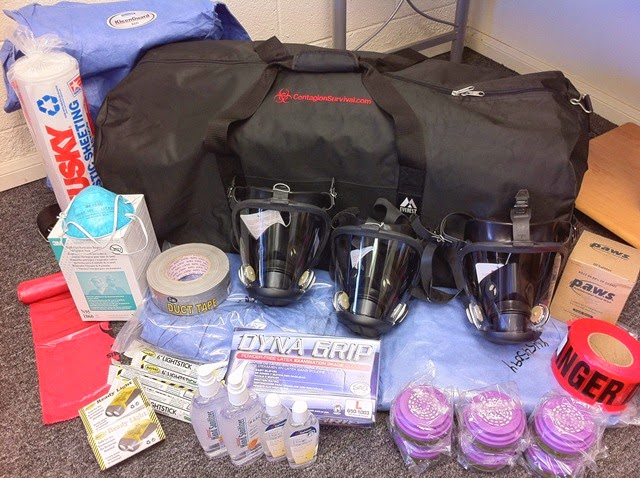
            Now if you are in a situation where you are more likely to come into contact or close proximity to others infected with Ebola, then medical professionals recommend that, first, you do not travel to areas where it can be found. But, again, if you are unable to avoid being in close proximity to those infected with Ebola, then you should make sure that you are wearing masks, gloves, and goggles whenever you are around people or animals who may have Ebola.

Stay Prepared, stay safe!


Friday, September 26, 2014

Bugout Plan and Practice


           Most preppers have developed a plan to survive a SHTF scenario, however, I am willing to wager that many of them have not actually practiced those plans. If you do not practice your plan, then it could very weel be one that looks good on paper but is either not practical, or, as much as it may be hard to admit, beyond your skills.
            The military has a saying that can be used to apply to SHTF planning, "Train how we fight, and fight how we train". This means, that if when you practice implementing your training, you try to do it in as real a way as possible, so that it will come naturally to you when it is the real deal.
             In this post I will be going over the importance of timed practice planning, arranged meeting sites, and supply stops.

Timed Practice Planning-
             Do you know how long it will take you to get your gear, and get to your various locations? I mean actually know. How about by foot, or in traffic? Is there more than one way you know how to get to the destination?
             These are all things that are important to know as part of your planning. It is easy to tell yourself or your prepping partners, that in an emergency situation you all should meet at location B before moving on to location C, however, you should perform timed practice runs, that take place during different times of day, and year. 
               For example, My wife and I have a planned set of secure locations that we can make our way too, in the event of an emergency. One of the locations, can take anywhere from five minutes, driving time, to almost twenty minutes, and that is within an hours time difference. Can you imagine if the roads were grid locked, or filled with accidents and rubble? 
                 For this reason I encourage you to run a timed practice run, and if possible, run a timed practice march, where you are carrying your bugout pack. If you do this while wearing a pedometer then you will be able to get a base line of how far you can walk with your gear in what time frame. It is a good piece of knowledge to have about yourself. I also encourage you to have more than one route to your destination, as one may be blocked off. 


Arranged Meeting Sites-


                Having a bugout point is great, and valuable, however, you may not have a property to retreat too, or your property is currently inaccessible, or your bugout location is a healthy distance away, having stepping stone sites and meeting locations can prove invaluable.
                It is also important that if you have others in your prepping group, everyone is very clear on the location meeting sites, and how long the group intends to stay at the site before moving on. You should also have a way of marking the site for late arrivals, letting them know that you were there, and where you are heading next. This could be as simple as drawing a tree to symbolize bugout cabin/property, or a word like "hunting" to relate a favorite camping location. However you mark the site, you want your loved ones to know what you mean, and those who did not prepare to not be able to track you via your markings.

Supply Stops-
         I cannot tell you how many times I have heard someone say that in the event of an emergency they are going to their nearest Wal-Mart or Army Navy store for supplies. Each time I hear it I always think "You and every other unprepared person in your city." As if that idea is original and unique to them. That is the very first thing anyone unprepared does in a SHTF scenario, hit up the stores until there is nothing left, then they try to survive off of scraps until help arrives to save them. 
         Those are the people that we prepare to defend against. I will not take food out of my loved ones mouths because someone was too foolish to plan ahead. 
Charles Darwin said
 "It is not the strongest of the species that survives, nor the most intelligent, but the one most responsive to change."
          In my opinion, the best alternative to planning on looting other locations, is to build your own supply, and encourage your friends and loved ones to do the same. That way you have built a network of multiple resource locations, accessible to you and your loved ones. All your eggs aren't in only one basket. The down side is, if others in your network are not carrying their weight with prepping, and relying too much on the group then they become a liability. Also, if you are a solo prepper then you don't have a network of people to rely upon, so other options to consider is maybe stocking a storage unit in between you and your bugout point with resources, or time capsule stashes (which is not advisable to do on property you do not own, as it could be discovered).


Stay prepared, stay safe!


Thursday, August 14, 2014

Communications When SHTF


         Most of my posts revolve around items and methods of immediate survival, this post, however, will be dealing with different forms of communication methods that are good to use in a SHTF scenario. And the most popular method of communication in a disaster is radio communication.
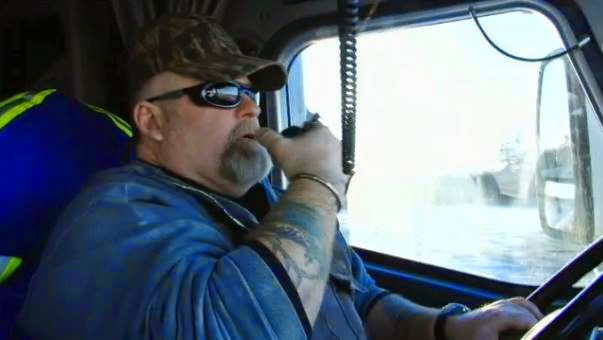
          Now when you think of radio communication, you may imagine something like the above picture, or that of the trucker below:

        However these are only small parts of the radio communication world. It has grown in technology, and it attracts not only preppers and survivalists, but an entire community of Amateur Radio enthusiasts.
         
        Now I am not claiming to be an experienced radio operator, but I am looking into setting up my own radio center, not only so that I can keep in contact with loved ones, and other members of my prepping team, but also so that I can monitor emergency broadcasts, and, if needs be, radio for help. I will not be dependent on anyone else for information gathering, and be able to be informed during a crisis.
        You do need to keep in mind that you will need to get a licence. US licenses are good for 10 years, and anyone may hold one, except for a representative of a foreign government. Within the US there are three different licence classes you can hold, technician, general, and extra.

Technician- 
         This is the most basic, and entry level licence for the amateur radio enthusiast. You only need to pass one examination of 35 questions on radio theory, regulations, and operating practices. This licence will grant access to all Amateur Radio frequencies above 30 megahertz. It will also allow for limited privileges on the HF, or "short wave" bands used for international communications.

General-
          This class of licence will grants operating privileges on all Amateur Radio bands and all operation modes. This licence will open up far more options for world wide communications. To earn the General class licence you must have first past the Technician exam, and then you must also pass a second 35 question exam that goes more in depth.

Extra-
           The Extra class licence will convey all operating privileges on all bands and all modes for US Amateur Radio. It is also the most difficult licence to earn, as it requires you to pass a very detailed 50 question exam, as well as having already passed the prior exams for the prior licence classes.

            Not every level will be best for everyone, and I can see how the Technician class licence would probably prove sufficient for the day to day prepper/survivalist. This would allow you to operate and use the traditional radios that you would find in many vehicles and trucks, such as the example below:


             The above type of radio would be an excellent basic method of back up communication to have on hand in a SHTF scenario, not to mention they can come in handy on a road trip/camp trip when convoying with friends or family.
              Having one of the above radios in your cars shouldn't stop you from having a set up of some kind at your home, perhaps having a little more of an elaborate set up. This could help provide a base of operations for you and your group. And it also can provide you will an option for being able to transmit a stronger signal.

                  Regardless of the set up that you choose to have, I would recommend that you look into this method of communication, as you may never know when being able to hear transmitted information can save your live. Just think, for example, if you are in a SHTF scenario and you are trying to escape from a dangerous environment, be it a city or town, a radio may allow you to hear if the escape rout you were planning on taking has been flooded, grid lock traffic, or even crosses into a contamination zone. With a radio you can also remain updated on rescue or relief efforts, or in the event of some kind of military occupation or attack, who, did it, what the response is going to be, and where the safest areas may be.

                  There are also a number of hand held radios that you may choose to invest in instead of the stronger radios above. These radios do not have the large range as those above, however, they are great for keeping in touch with your family and fellow preppers within your city. There price can range from as cheap as $25.00 to upwards of $1000.00, and as much as I hate to admit it, every forum and blog I have found on the subject states that the greater the price there is typically a better quality of signal and range. Regardless, I think that you can find something in the middle somewhere that doesn't set you back too far. Even if they are only used as back ups.


           The other option of radio information gathering doesn't need to have two way abilities, although they can come equipped with that option, are the emergency weather radios. These are radios that usually come with an alternative power methods, such as solar power or crank power, along with the option for batteries. These are good to have just so you can at least receive situation updates or broadcasts. Below are some examples.

 Stay prepared, stay safe!

Check out the following site for more information on this topic:

www.arrl.org


Thursday, August 7, 2014

Bugout Cheap, Bugout Green!


    So I have discussed bugging out to a home or property, but now I want to touch basis on different options that are available for building your home away from home, or even your actual home. Below are the top cheap, and green, methods I have found for building unique energy efficient homes or cabins.

Earthship

     As described by their web site:

"An Earthship is a building that will take care of you, while still being sustainable, affordable, strong and meeting your local building codes."

      Earthship's are homes built with natural and recycled materials. They are probably the most expensive building method I will be covering in this post, however it is still a great deal cheaper than other typical home building techniques, and you can get a better financial return of having a home that is almost entirely energy self sufficient. These homes are all equipped with solar panels and/or wind turbines. They come in a variety of designs and layouts, and you can even work with the designers to create your own custom plans. They are also built to meet standard building codes.
    Additionally, as you can see in the picture above, most Earthships come with some form of greenhouse/porch combo. A useful feature for preppers.

Earth Bag
    

      Earth bag building is a very cheap and very simple form of construction. It actually takes the earth from the building site, and fills it into long bags, varying in makes and material, and these bags can be shaped to build a wide variety of homes. You then coat them with plaster/stucco.They are more resistant to earthquakes, and maintain a more stable temperature throughout the year, cutting on heating and cooling costs.

Earth bag building can be shaped into a number of designs and sizes. You can also build them yourself with a little self education. This may be the cheapest method of building. Below are a couple more pictures of some size and design variations:


Cob House
       

        Lastly, the cob house. Now the cob house may take longer to make, and may be more labor intensive, but this is another do it yourself building style that when completed can look like something straight out of The Brothers Grimm books. The cob home may be one of the oldest building styles to still be used in the world today. It is a made of clay, sand, straw, and water, and many times you can use some of the material from the building site for ingredients. But just as with the earth bag building, you can fully customize your own home designs and build your home for much cheaper than a standardized homes, and it shares the same energy efficient strengths as earth bag building. Below are some pictures showing other options with cob building:


Stay prepared, stay safe!


Check out these sites for more information on these building methods.

www.earship.com

www.earthbagbuilding.com

www.thiscobhouse.com


Wednesday, July 30, 2014

Good Tools with Multiple Uses

      No I know that I have talked about choosing prepping items with multiple uses in previous posts, however I feel so strongly about it that I decided to dedicate an entire post to multi-tools. Also note that by googling survival multi-tools you will be able to find most of these various tools I will go over. Amazon and eBay are where I have purchased a few of mine.
      Most of you are probably familiar with the traditional multi-tools (as below), however I am happy to say that there are plenty of people out there that love multi use items as much as I do, because almost every month you can find a newly designed multi-tool.


      Several of these newly designed tools are on my holiday shopping list. I mean why transport a toolbox around in a SHTF scenario when you can literally have two or three multi-tools? The answer I have to that is "only fools carry more than they need."
      I am a personal fan of the above multi-tool, as it is an improved version of the military trench digging tool that I am already familiar with. This would be a great tool to keep in your bug out bag/vehicle. Besides the axe, saw and pick attachments the shovel attachment can also be used as not just a digging tool but also a cooking surface.
      Crowbar, hammer, tomahawk. Need I say more?
      Now I love this little tool. It is a multi-tool that fits right in your wallet. I found this baby on Amazon, and I fell in love. Mine should be arriving any day now.

      Not all multi-tools are handyman tools or weapons, some like the one above is a wonderful tool to having power and light,as well as receiving information. I really like that it is powered by both solar power and crank power.
       Now the two multi-tools below are the ones that I carry on my person all the time right now. The wallet multi-tool was a gift from my wonderful wife, and the other I clip to my belt loop, and is also a self given gift after my deployment. 


Thursday, July 3, 2014

Self Defense Training


           I have posted about building a prepper armory, and protecting your home and property, but now I am wanting to talk about self defense training. I think that it is very important to get basic training in, at least one martial art, this is so that we can be even better prepared for a SHTF scenario. Since we never really know what struggles we will face, the better trained and skilled we make ourselves the higher the chances of survival.
          My wife and I have both trained in a variety of martial arts styles, and I am sure have shocked our neighbors with our sparing and combat training that we do with one another in our yard. We train for the worst case scenario, because if we are a formidable force prepared for the worst case scenario, how much more formidable will we be in only mild SHTF scenarios? Also, think for a moment that if you had to engage an enemy that only had firearms with little to no training or a well trained unit of skilled combatants that also happen to be armed and trained in those weapon systems, which would you rather face?

         Some examples of the combat styles that my wife and I have trained in are:
Wing Chun
Jujitsu/Military Combatives
Karate
Ninjutsu
Kung Fu
Fencing

         We are also currently looking into Krav Maga, favoring the knife fighting experience that it offers.
          From the above list of styles that we have worked with, the ones that I would recommend most for a prepper/survivalist would be Wing Chun, Jujitsu, and Ninjutsu. I recommend these as they help make a well trained tactical specialist with a rounded education covering a variety of situations.

 Wing Chun- The great thing about this style is that it is very simple and effective. It does not require one to be in the peak of physical perfection, and within a short time you are proficient enough to be considered a formidable hand to hand combatant. It focuses on not allowing yourself to be taken to the ground and immobilizing your enemy. This also happens to be my wife's favorite style.

Jujitsu- Is the combat style that most branches of the U.S. armed forces have at least rudimentary training in. It has a focus on grappling, and combat once it has been forced to the ground. Even though we never want to let ourselves be taken to the ground in a fight, you do not want to be helpless if it ever happens.

Ninjutsu- The training you receive in this art form contains techniques used by armed forces and espionge agents around the world. It trains in stealth, and misdirection. These are skills that are not only used for combat, but can be used for scouting, hunting, hiding, and evasion. Become invisible and you can have a freedom of movement in a SHTF environment.

            These are not the only styles that offer you these training option, however they are the ones that I have personally experienced success with. And by all means, don't limit your training here, in my opinion you can never receive too much martial arts training.
             I would like to advise that when you study a martial arts style, try to get a friend to take it with you, as it is harder to fall out of the habit of attending classes and slack on your training if you are alone. If you have no friends who are interested, then make a work out friend from someone from your class to help keep each other motivated.
             And ladies, take classes too, some of the best martial artists that I have ever had the pleasure of meeting and competing against have been female.


           To both men and women, just as the image at the top of this post says, don't be a victim. If someone trys to hurt you and/or your family then open the flood gates of pain against them!


Stay prepared, stay safe!


Wednesday, June 25, 2014

A Prepper's Armory


           Now this is a debatable topic among some preppers, as there are many that do not want to use lethal means of protection when planning their preps. I am of the opinion that in order to be best prepared to survive in a SHTF scenario we must be willing to take extreme measures in order to protect ourselves and our families. This includes training with firearms, and some form of hand to hand combat(which I will cover in a future post)
            So, in this post I want to go over a very basic armory system that each prepper should strive to build, especially with stricter firearm laws looming on the horizon. Your armory should really consist of a sidearm, hunting rifle, assault rifle, and a shotgun. Each of the weapons have their uses in a SHTF situation.

Sidearm-


            A sidearm, or handgun, is a valuable weapon for any prepper, as they are light, concealable providing an element of surprise, as well as possibly being a weapon of last resort. This is weapon for self defense, as you will not be hunting with one. They are ideal back up weapons.

Hunting Rifle-

           A hunting rifle is, as the name suggests, perfect for hunting, as they tend to have larger rounds than assault rifles, as well as being more accurate for the one shot one kill mentality. Having said that they are also great for doubling as sniper rifles. I would recommend that when shopping for one you get one that can be used to hunt both deer and elk, as well as invest in a scope, this provides you the option to have more options for hunting, as well as doubling for a long range scouting device.
         I am also going to include in the hunting rifles to also look into getting a pellet/BB gun. Although they are not usually seen as lethal for hunting, they are perfect for small game animals like doves, squirrels, and gofers. Also you can get thousands of rounds for very cheap, and they are air powered.


Assault Rifle-

           An assault rifle is ideal for combat and protection in a SHTF situation, that is why they are used by virtually every armed force in the world. They can can be loaded with several round magazines of varying sizes and reloading is relatively quick. The most common assault weapons that I have seen in the prepping forums and websites are the AK-47 and the AR-15. Both have their pros and cons, and it really comes down to a personal preference. The AR-15(picture above) is a civilian model of the rifle used by US troops.  Because of my time in the Army I am extremely familiar with this rifle and all of its parts, as such this is the rifle I have for myself. The primary strengths that the AR-15 has over the AK-47 is that it is much more accurate, and the ammo is usually cheaper and easier to find.
           The AK-47(picture below) fires a more powerful round and has fewer moving parts, so it makes a great suppression weapon, but as I said it is not as accurate as the AR-15.

Shotgun-


           Lastly, the shotgun is an excellent home defense weapon, and can also double for hunting flying game. If you have a shotgun and someone is trying to force entry into your house they are going to be very sorry when they see that they are looking down the barrel of a shotgun. This weapon is for close range, and hit with the force of a sludge hammer to the chest. Fun times.


          I would love to hear what weapon choices my readers like and why, as well as suggestions for what handgun and why I should try for myself, as my wife and I are in the market for new sidearms.


Stay prepared, stay alive!